Contraindications:
The need for immediate thoracotomy (surgical chest opening) is an absolute contraindication.
Relative contraindications include:
- Coagulopathy (bleeding disorders)
- Pulmonary bullae (air-filled spaces in the lungs)
- Pulmonary, pleural, or thoracic adhesions
- Loculated pleural effusion or empyema (pockets of fluid or pus)
- Skin infections at the insertion site
Procedure and Risks:
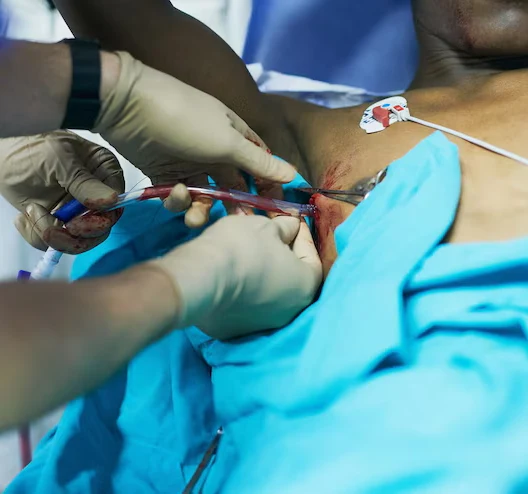
Chest tube insertion requires careful consideration of nearby organs such as the lungs and heart. While generally safe, potential complications include:
- Excessive bleeding
- Infection at the insertion site
- Injury to the heart, blood vessels, arteries, or lungs
- Diaphragmatic perforation (damage to the diaphragm)
- Punctured lung
It is important for the physician to discuss these risks with the patient beforehand, especially in cases where the patient is on blood-thinning medications, as this could increase the bleeding risk.
Chest Tube Removal:
Chest tubes are typically removed when they are no longer needed, such as when drainage has stopped, or the tube becomes obstructed or dysfunctional.
Recovery and Care:
After the procedure, the patient's symptoms should improve. It is important to monitor the insertion site for any signs of infection, such as swelling, redness, or discharge, and report these to the doctor. A small scar is usually left after healing.
Outlook:
Tube thoracostomy is a minimally invasive procedure to access the pleural space for fluid drainage or medication administration. In cases where the tube does not resolve the issue, further surgery may be necessary. Once the chest tube is removed, patients should follow post-removal care instructions from their healthcare provider.